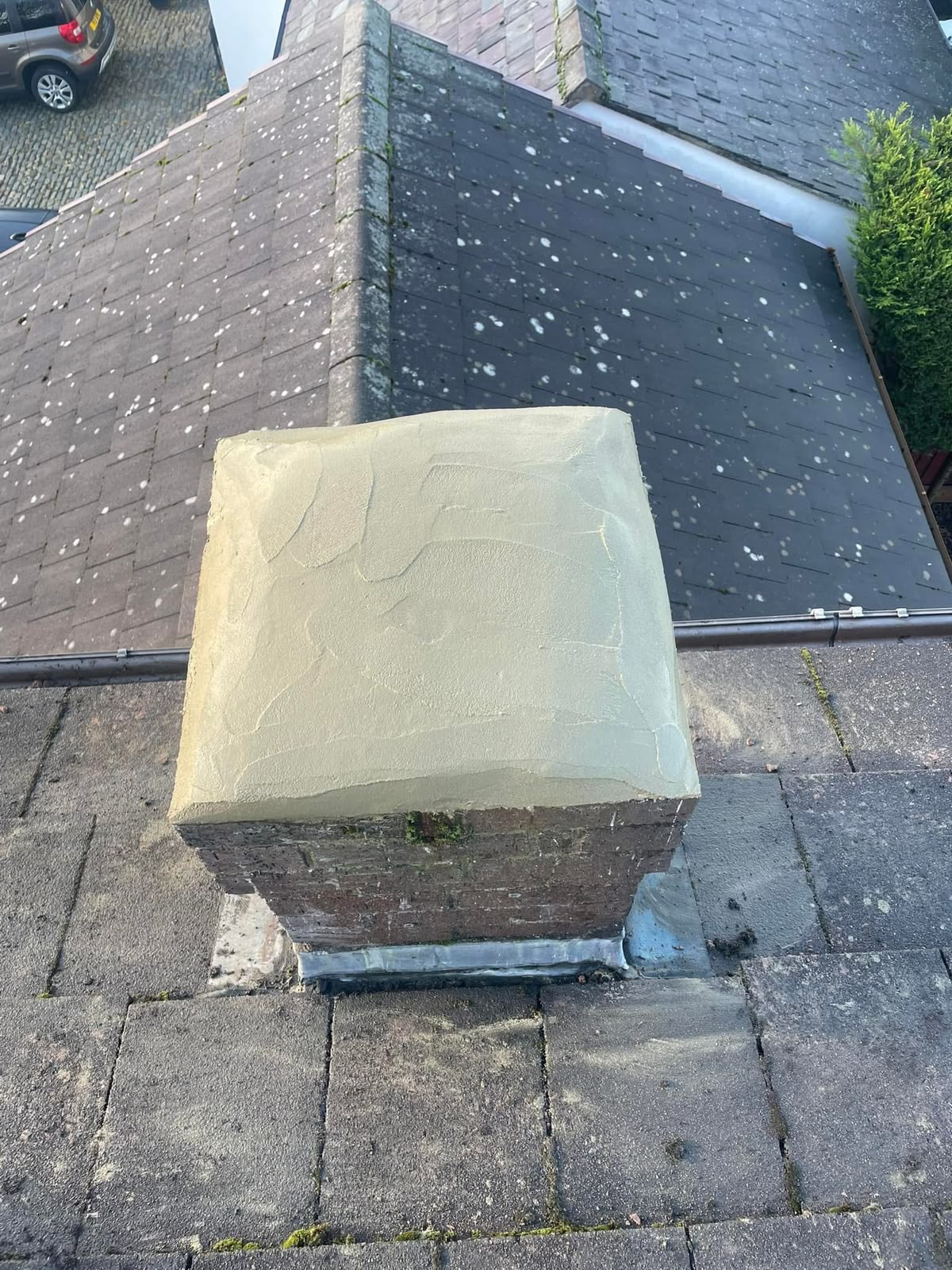
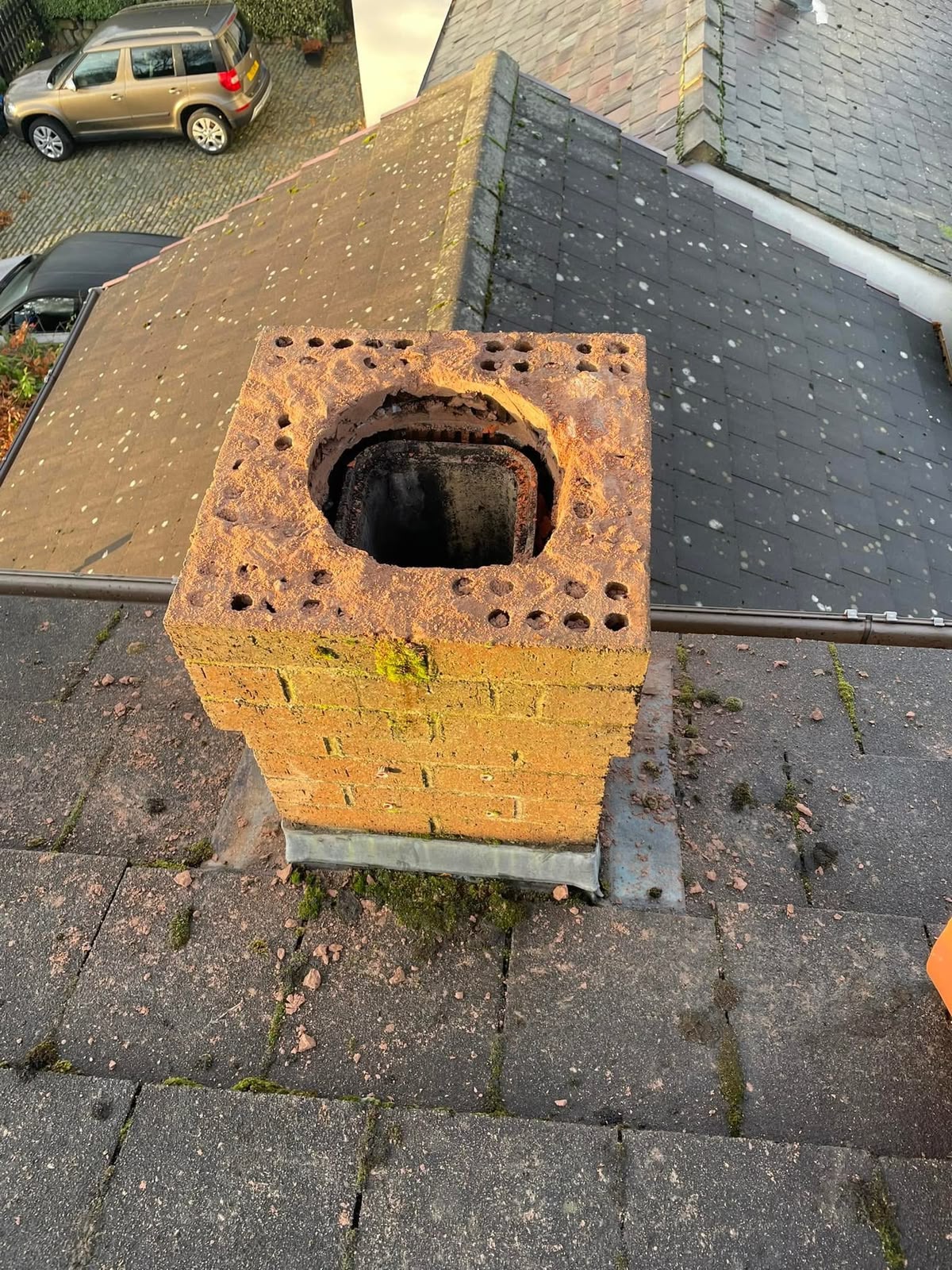
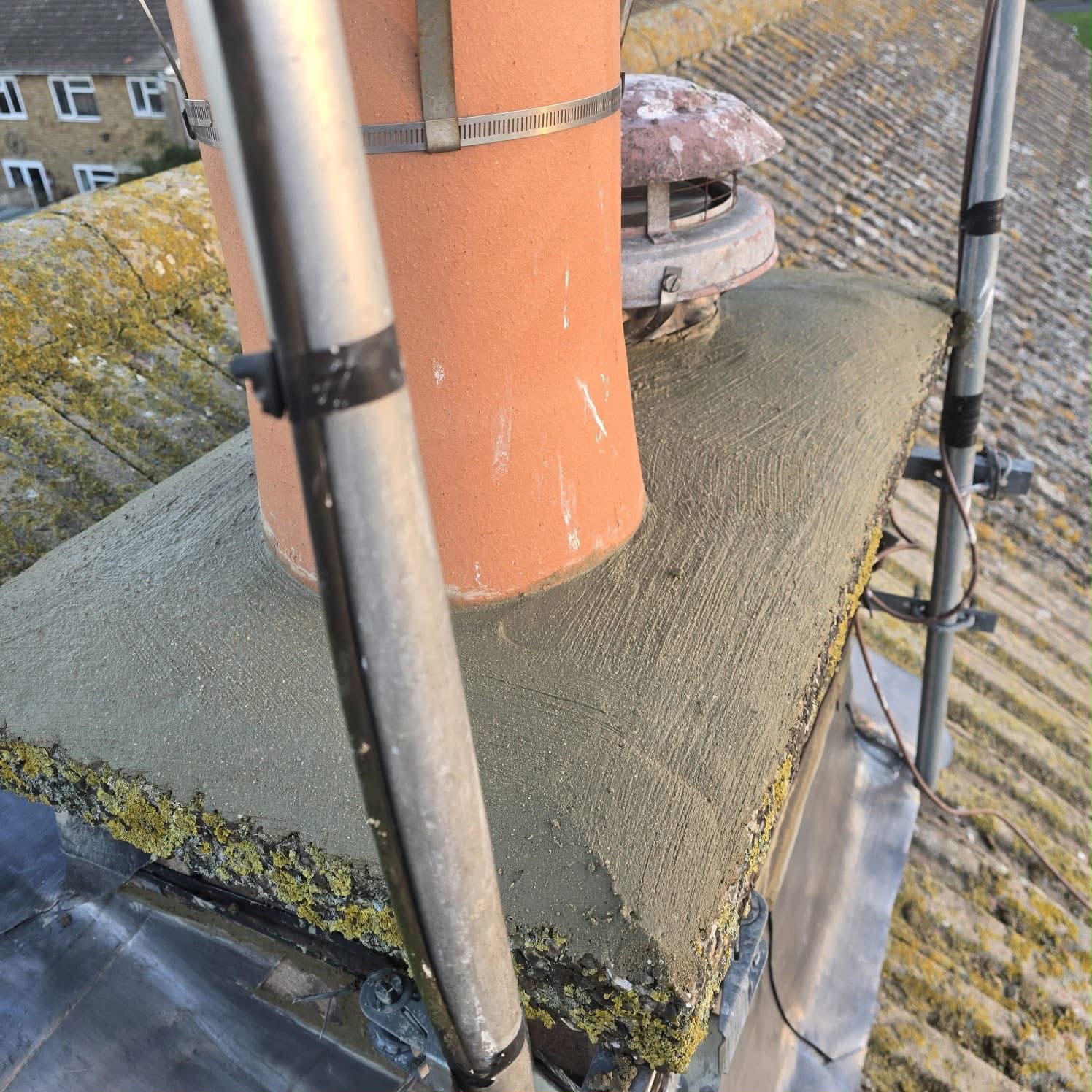
Chimney repairs and repointing in Glasgow: new leadwork and mortar around a brick chimney on a tiled roof

Roofing services · Glasgow & west of Scotland

Chimney Repairs andRepointing in Glasgow,Sealed at the Stack

Repointing, rebuilding, new flaunching, cowls and fresh leadwork, stopping water tracking down the chimney and into your ceilings, for one agreed fixed price.

20 years' experience · fixed-price quotes · 24/7 emergency cover

Recent chimney repairs & repointing work

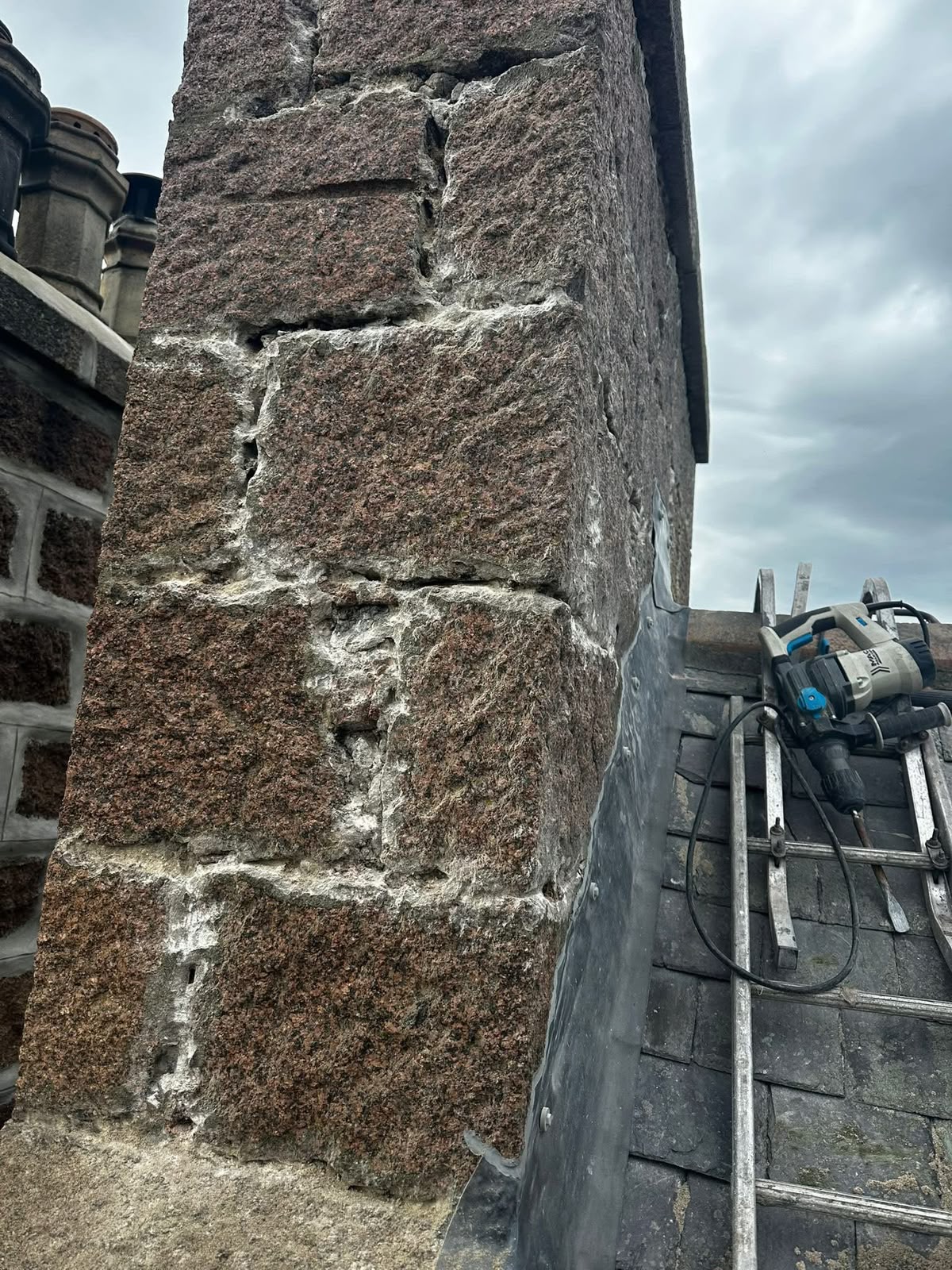
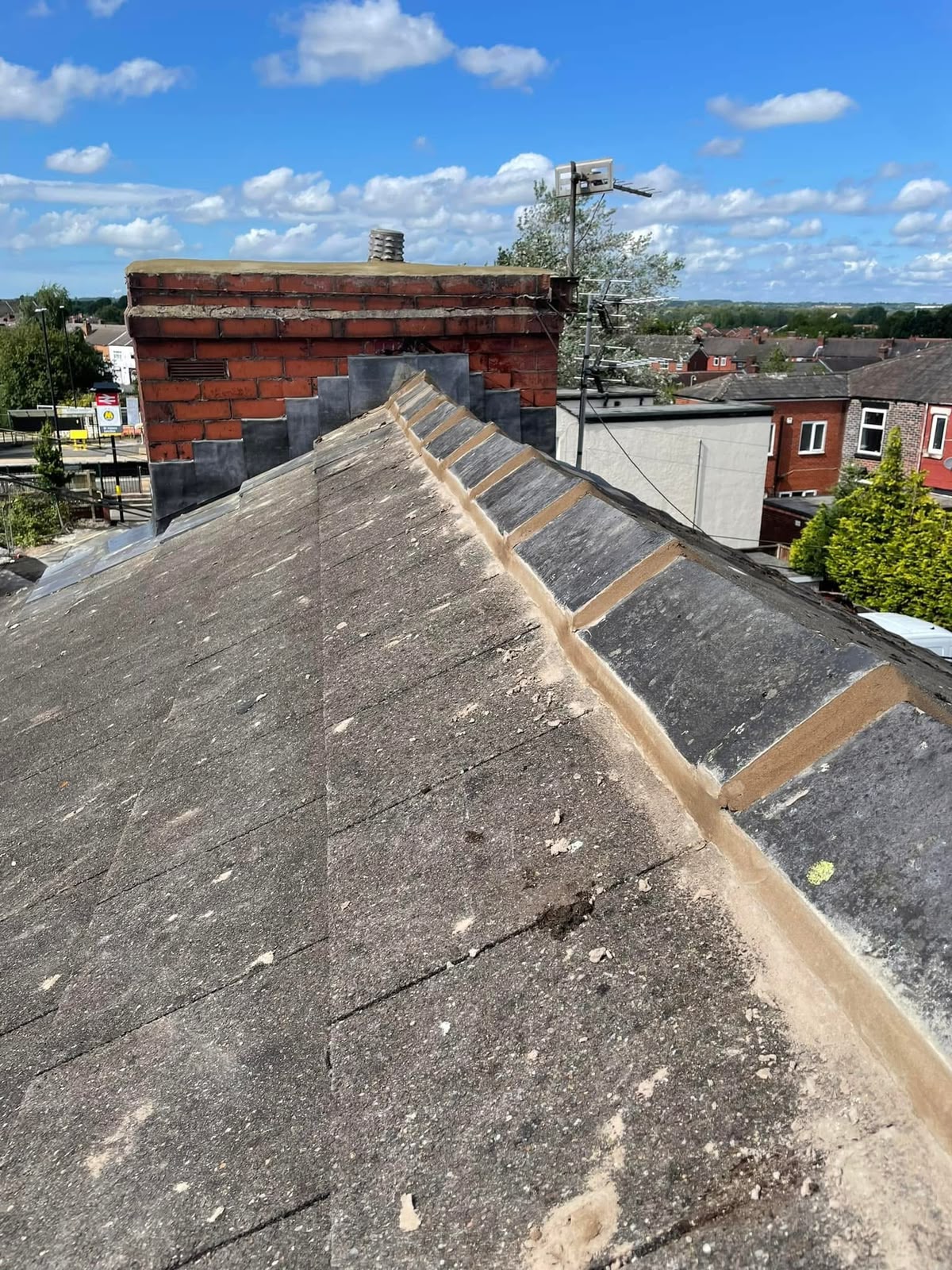
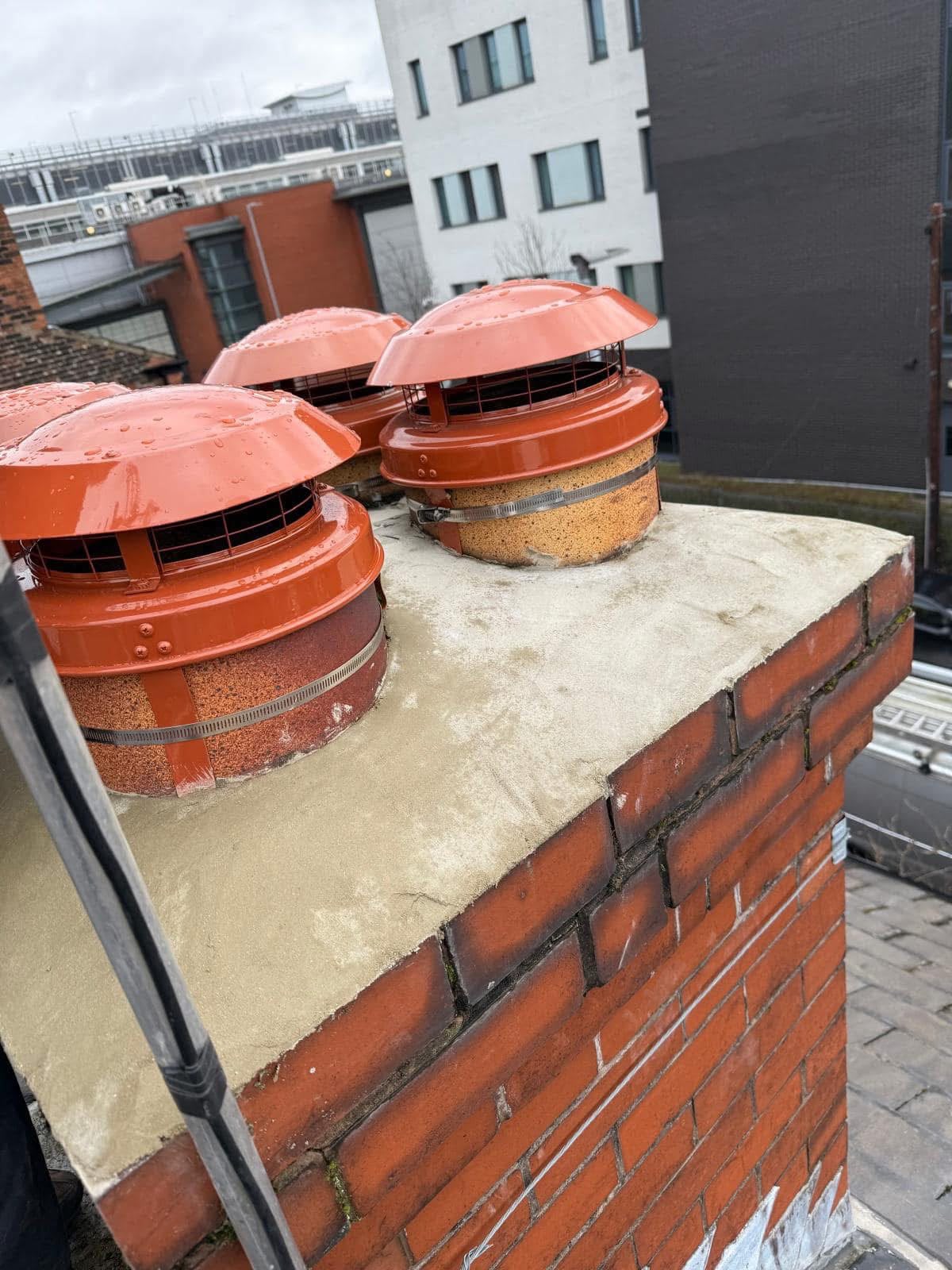
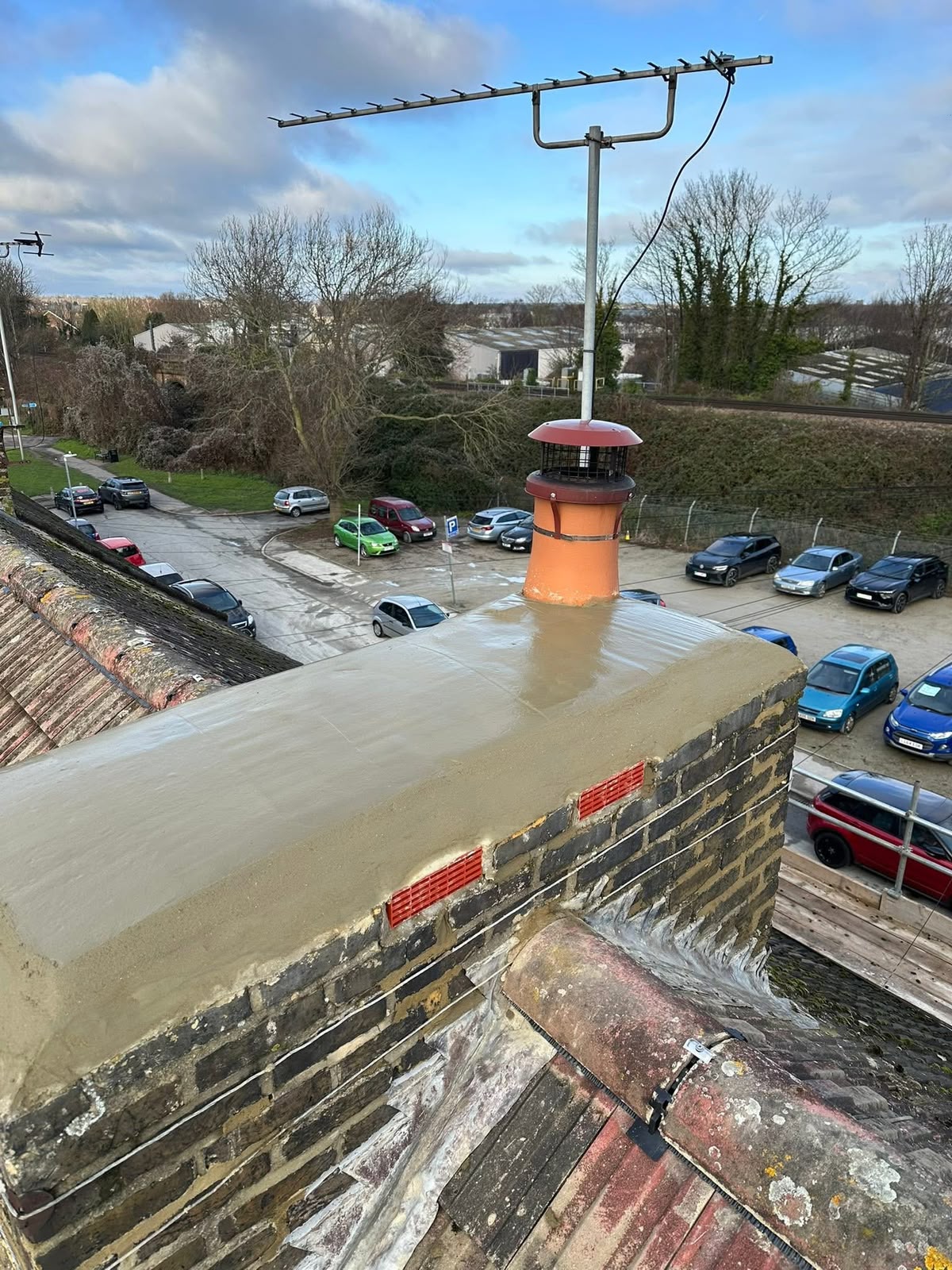
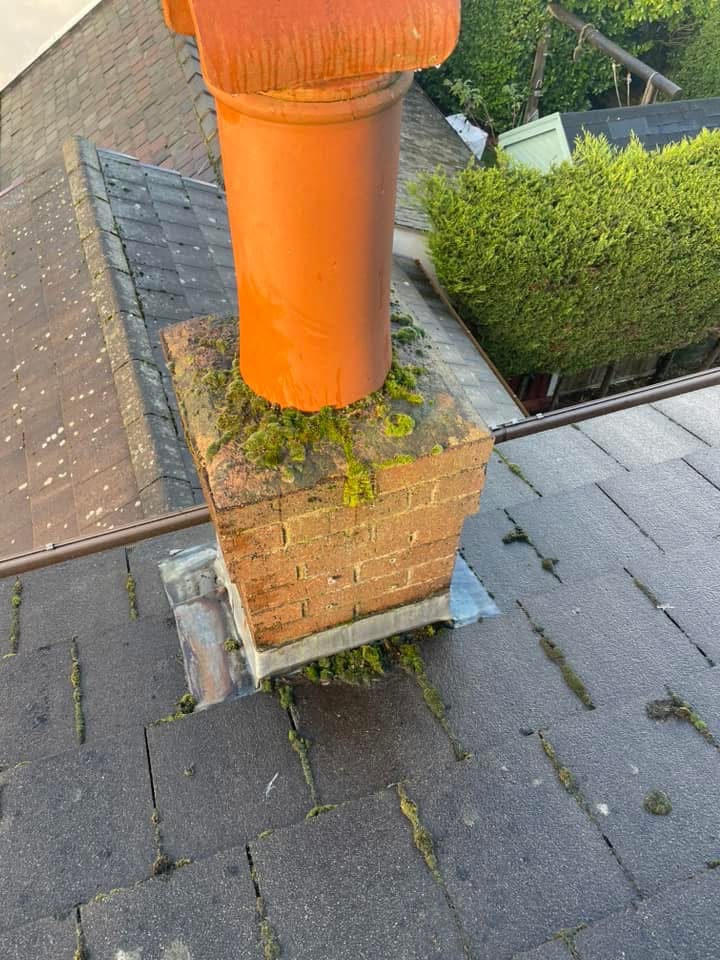
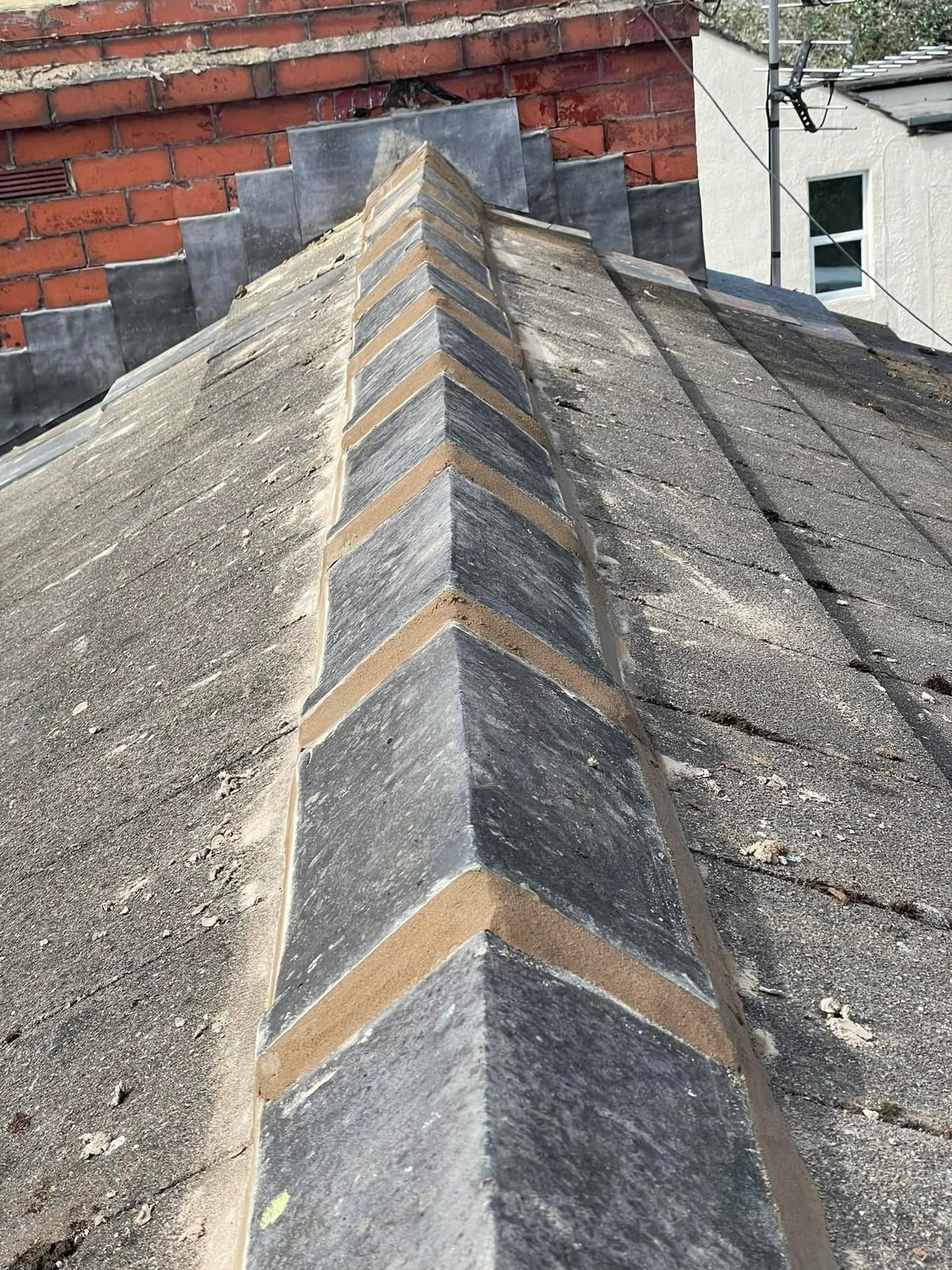
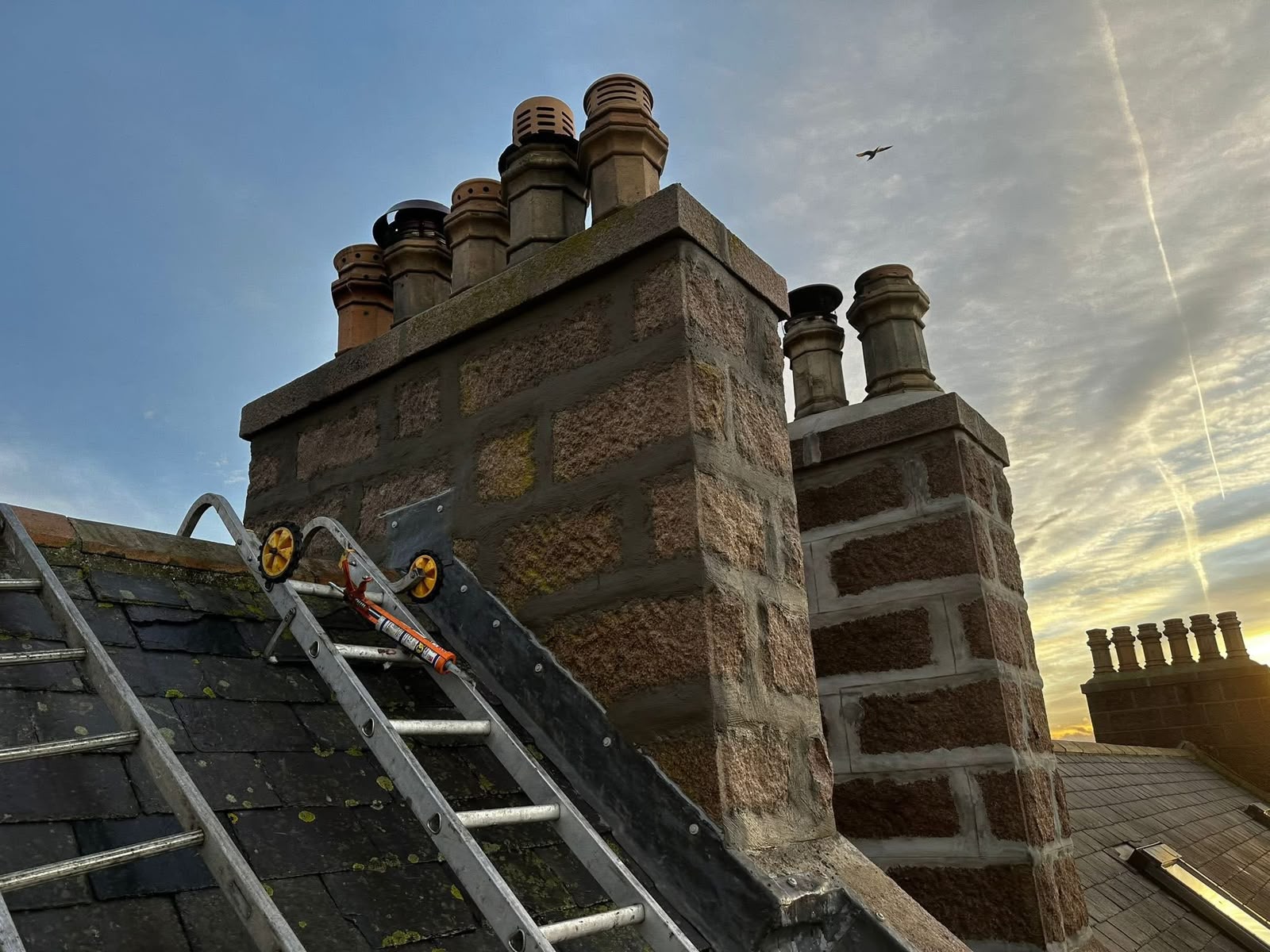
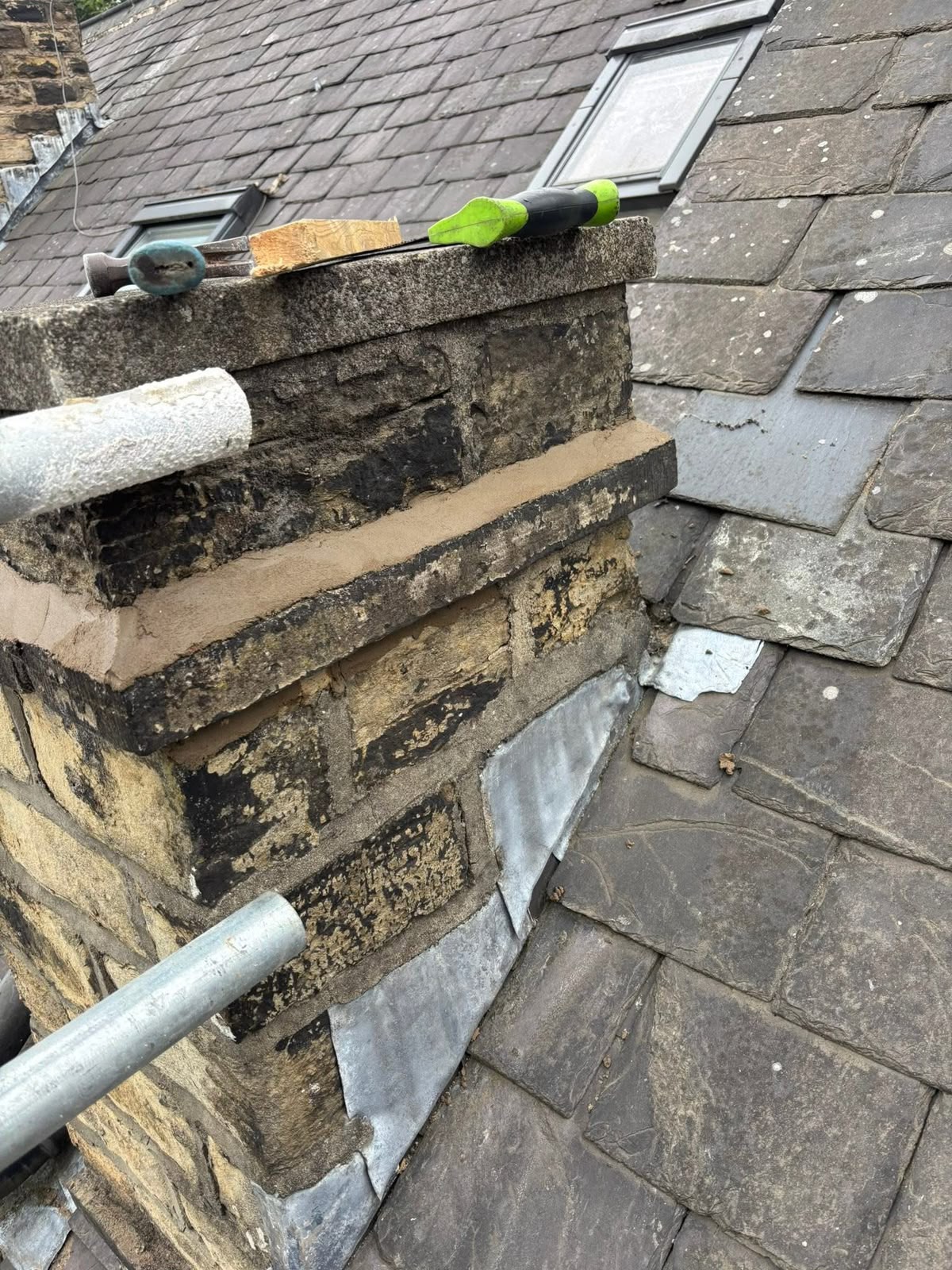
Chimney repointing Glasgow: stone chimney stack rebuilt and repointedChimney repairs Glasgow: new lead flashing and mortar around a brick chimneyChimney repointing Glasgow: fresh mortar bedding along a slate roof ridge and stackChimney repairs Glasgow: new cowl vents fitted to a repointed chimney headChimney repointing Glasgow: refurbished chimney stack with a single clay potChimney repairs Glasgow: weathered brick chimney pot inspected before repointingChimney repointing Glasgow: uniform repointed mortar joints on a slate ridgeChimney repointing Glasgow: stone chimney stack repointed and made weathertightChimney repairs Glasgow: brick chimney repointed alongside a roof windowChimney repairs Glasgow: freshly mortared chimney cap and flaunchingChimney repairs Glasgow: storm-damaged brick chimney stack prepared for rebuildChimney repairs Glasgow: new chimney flaunching formed around a clay pot

20 years

Roofing experience

Team of 10

Roofers led by John Tate

Fixed price

Quotes, never day rates

24/7

Emergency roof repairs

Overview

What chimney repairs & repointing in Glasgow actually involves

Chimney work covers everything on and around the stack: repointing eroded mortar joints, rebuilding courses of brick or stone that have failed, renewing the flaunching that holds the pots, fitting cowls, and replacing the lead flashings, soakers and back gutter where the stack passes through the roof.

The stack is the most exposed masonry on the building, wind-driven rain hits it from every side and there's no roof above it. It weathers faster than anything else, and it's the single most common source of a leak near a chimney breast.

Who it's for

Anyone with a damp patch on a chimney breast, staining on the ceiling near a stack, or visible mortar loss and vegetation growing out of the brickwork.

Also owners of disused chimneys that need capping properly, and anyone whose surveyor has flagged the stack ahead of a sale.

Why professional work matters

Chimney work is the most exposed height work in domestic roofing, usually needing scaffold rather than a roof ladder, and it combines masonry, leadwork and roofing in one small area. Very few problems at a stack are single-trade problems.

The mortar mix matters as much as the workmanship. Using a hard cement-rich mortar on soft old brick or sandstone forces moisture and salts to escape through the masonry face instead of the joint, which spalls the brick and accelerates decay.

What happens if it's left

The cost of waiting

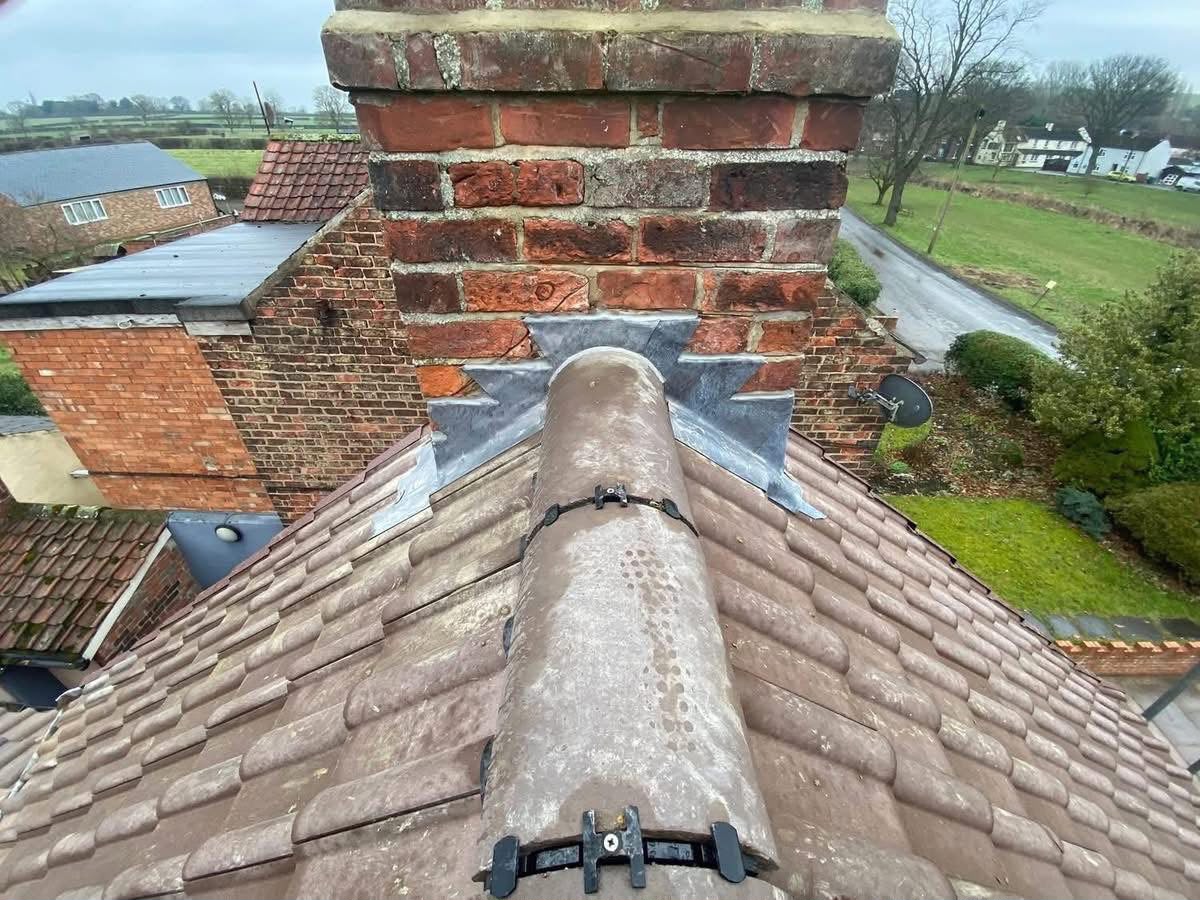
A chimney takes the worst of the weather with no protection. Mortar joints erode, water gets into the core of the stack, and the whole thing acts like a sponge with a direct path down into the roof space. That's why chimney damp shows up on the breast in the bedroom below rather than in the loft.

Freeze-thaw does the rest. Water in an open joint or a saturated brick freezes, expands, and blows the face off the brick. Each winter takes a little more. A stack that needed repointing five years ago needs rebuilding now.

Damp on chimney breasts

Water saturating the stack tracks down internally and shows on the breast in the room below, often blamed on rising damp or condensation and treated as the wrong problem for years.

Repointing becomes rebuilding

Once frost has spalled the brick faces and the joints are deep, a straightforward repoint is no longer possible. Courses have to come down and be rebuilt, a far bigger job.

Falling masonry and pots

A stack with failed flaunching and eroded joints is a safety issue. Loose pots and brick sit above a roof, a garden, and often a pavement.

Leaks through failed leadwork

Where the stack meets the roof, split or missing lead lets water straight in. Mortar fillets used instead of lead crack out within a couple of winters.

Common mistakes we're called in to undo

  • Repointing with a hard cement mortar over soft brick or sandstone, which accelerates decay
  • Sealing the stack with a waterproof coating that traps moisture inside it
  • Replacing lead flashing with a mortar fillet or mastic to save money
  • Capping a disused chimney with no ventilation, so trapped moisture causes damp inside
  • Repointing a stack whose flaunching and pots are already failing, then paying for access twice

Our process

How we run a chimney repairs & repointing job

  1. STEP 01

    Inspection

    We assess the whole stack: joints, brick or stone condition, flaunching, pots, cowls, and the lead flashings, soakers and back gutter where it meets the roof.

  2. STEP 02

    Diagnosis and fixed price

    We identify where water is getting in and whether the stack needs repointing, partial rebuilding or full rebuilding, then quote one fixed price for the agreed scope.

  3. STEP 03

    Access and preparation

    Proper scaffold access, then joints raked out cleanly to depth, or defective courses carefully taken down and set aside where materials can be reused.

  4. STEP 04

    Masonry, flaunching and leadwork

    Repointed in an appropriate mortar, brickwork rebuilt where needed, new flaunching formed around the pots, and new code 4 or 5 lead dressed at flashings, soakers and back gutter.

  5. STEP 05

    Finish, verification and clear-up

    Cowls fitted where required, work checked over for weather-tightness, roof covering around the stack made good, and the site cleared of all debris.

What you get

Why homeowners choose Monarch for this work

Chimney damp stopped properly

Sealing the stack at the joint and renewing the leadwork removes the actual water path instead of redecorating around it.

The right mortar for the masonry

Mix matched to the brick or stone, so moisture escapes through the joint rather than blowing the face off the masonry.

Masonry and leadwork in one visit

Chimney problems are usually part masonry, part lead, part roofing. One contractor, one scaffold, one fixed price.

Safety restored above your roof

Loose pots, cracked flaunching and unstable courses dealt with before something comes down.

Years added before a rebuild

Repointing a stack while it's still repointable is a fraction of the cost of rebuilding one that wasn't.

Priced before we start

Fixed-price quotes for the agreed scope, so a job at the top of a scaffold doesn't turn into an open-ended bill.

In detail

Chimney Repairs & Repointing: materials, methods and variations

Repointing: mortar and method

Repointing means raking out the eroded mortar to a sound depth and refilling the joint with fresh mortar of an appropriate mix. Rake too shallow and the new pointing falls out; use too hard a mix and you damage the masonry it's meant to protect.

Older Scottish stacks in sandstone or soft brick generally want a softer, more permeable mortar so the joint remains the sacrificial element. Modern hard brick tolerates a stronger mix. Getting this judgement right is what separates a repoint that lasts decades from one that fails in five years.

Flaunching, pots and cowls

Flaunching is the mortar bed on top of the stack that holds the pots and sheds water off the head of the chimney. It's exposed to everything and it cracks with age and thermal movement, and once it does, water goes straight into the core of the stack.

Renewing flaunching means removing the old bed, resetting the pots and forming a new weathered mortar cap with a proper fall. Cowls can be added at the same time: capping cowls for disused flues, anti-downdraught cowls where smoke blows back, and bird guards to stop nesting.

  • New weathered flaunching with a proper fall
  • Pots reset, replaced or removed as required
  • Capping cowls with ventilation for disused flues
  • Anti-downdraught cowls
  • Bird guards and mesh

Chimney leadwork

Where the stack passes through the roof there should be four separate lead elements: a front apron, stepped side flashings with soakers interleaved between the slates, and a back gutter behind the stack. Each has a job, and a mortar fillet does none of them.

We renew in correctly sized code 4 or code 5 lead, in appropriate lengths so it can move with temperature, chased into the joint, wedged and pointed. This is the single most common permanent fix for a leak near a chimney.

Partial and full chimney rebuilds

Where frost has spalled brick faces and joints are open and deep, repointing has nothing sound left to bond to. In that case the affected courses are taken down and rebuilt, reusing sound material where possible and matching brick or stone where not.

A full rebuild takes the stack down to roof level or below and rebuilds it, with new flaunching, pots and leadwork. It's the largest chimney job but it resets the stack entirely, and on a badly deteriorated chimney it's cheaper than two rounds of failed repairs.

Removing or capping a disused chimney

Not every stack needs keeping. Where a chimney is disused and deteriorating, taking it down and making the roof good removes a recurring maintenance cost and a future liability.

If you're keeping it, capping must include ventilation. A completely sealed flue traps moisture, which then finds its way into the chimney breast and produces damp inside the house, a very common outcome of a well-intentioned cheap cap.

Residential and commercial chimney work

Most of our chimney work is domestic: tenement, terrace and detached property across Glasgow, Bearsden, Milngavie and Lanarkshire. Larger stacks on commercial, church and institutional buildings involve more substantial access and masonry, but the diagnosis and the detailing principles are identical.

Questions

Chimney Repairs & Repointing FAQs

It depends on the size of the stack, its condition, and the access required, scaffold is usually necessary. We inspect first, then give one fixed price covering access, materials, labour and clear-up.

Repointing and new flaunching on a typical domestic stack is usually a matter of days once scaffold is up. Rebuilds take longer. We confirm the expected duration with your quote.

Most often because the stack itself is saturated: eroded mortar joints, cracked flaunching or failed lead flashing let water into the masonry, and it tracks down internally. It's regularly misdiagnosed as rising damp or condensation.

A properly raked and correctly mixed repoint on sound masonry lasts many years. Repointing done with too hard a mortar, or over masonry that has already spalled, fails much sooner, which is why the mix and the condition assessment matter.

If the brick or stone faces are sound and only the joints have eroded, repoint. If frost has blown the faces off the masonry and joints are deep and open, there's nothing for new mortar to bond to and rebuilding is the durable answer. We'll tell you which you're facing.

Yes; we can take the stack down and make the roof good, removing a recurring maintenance cost. Alternatively we can cap it, with ventilation, so it doesn't trap moisture.

Yes. Front apron, stepped side flashings with soakers, and the back gutter behind the stack are all renewed in code 4 or 5 lead. Mortar fillets and mastic are not a substitute.

Guarantee terms for chimney work are confirmed in writing with your fixed-price quote. Our 15-year workmanship guarantee applies specifically to new roof replacements.

Yes. If masonry or a pot is loose above a roof or pavement, call 07384 659498; we're contactable 24/7 and will make it safe.

Glasgow, Ayrshire, Greenock, East Kilbride, Hamilton, Lanarkshire, Bearsden, Milngavie and Cambuslang.

Next step

Seal the stack before it becomes a rebuild

We'll inspect the chimney, tell you whether it needs repointing or rebuilding, and price the masonry, flaunching and leadwork as one fixed sum.

Call NowRequest Estimate